
Full blood count test in London
Private full blood count tests at DocTap clinics across London, with GP review to interpret red cells, white cells and platelets in context.
Book a GP blood test at a convenient London clinic; your GP can arrange the right tests and follow-up where needed.
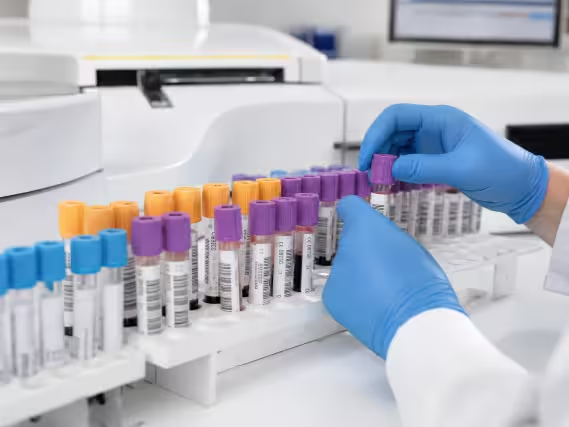
New to DocTap? Get £5 off
Join our newsletter and get £5 off your first booking.
Thanks — we've received your details.
If there's a next step for you, we'll send it by email.
Create your DocTap account with this email address to claim your £5 off. Offer available to new patients only. Unsubscribe whenever you like.
Test options
Full blood count and haematology tests
Browse the blood count and haematology tests we offer. To book a test, book a GP blood test appointment and your GP will arrange the most appropriate tests during your visit.
FBC, ESR
Sodium, Potassium, Chloride, Bicarbonate, Urea, Creatinine, eGFR
Bilirubin, Alkaline Phosphatase, AST, ALT, Gamma GT, Protein Total, Albumin, Globulin
Calcium, Phosphate, Uric Acid, Magnesium
Glucose, Triglycerides, Cholesterol, Iron (TIBC included)
HDL Cholesterol, LDL Cholesterol (calculated), Non-HDL Cholesterol
Red cells, white cells, platelets, haemoglobin
Haematocrit, mean cell volume, mean haemoglobin
Kidney and liver function
Glucose, triglycerides & cholesterol
FBC, ESR
Sodium, Potassium, Chloride, Bicarbonate, Urea, Creatinine, eGFR
Bilirubin, Alkaline Phosphatase, AST, ALT, Gamma GT, Protein Total, Albumin, Globulin
Calcium, Phosphate, Uric Acid, Magnesium
Glucose, Triglycerides, Cholesterol, Iron (TIBC included)
HDL Cholesterol, LDL Cholesterol (calculated), Non-HDL Cholesterol
CRP
Red cells, white cells, platelets, haemoglobin
Haematocrit, mean cell volume, mean haemoglobin
Kidney and liver function
Glucose, triglycerides & cholesterol
HbA1c
FBC, ESR
Red cells, white cells, platelets, haemoglobin
Haematocrit, mean cell volume, mean haemoglobin
From booking to results
Your appointment, step by step
Book online, see a GP, have your sample taken during the appointment and view your results securely in your DocTap account.
- 1Book online in minutesChoose your preferred clinic and time, and select a male or female clinician where available. You will get instant confirmation.
- 2We will tell you how to prepareMost blood tests do not need fasting. If a test needs anything specific beforehand, we will let you know before your appointment.
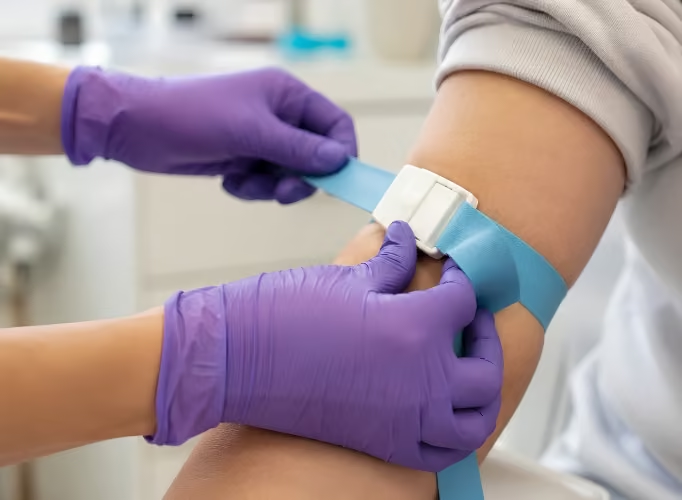
- 3See a GP and have your sample takenYour appointment includes a 15-minute GP consultation to discuss symptoms, check suitability or advise which test you need. A quick blood sample is then taken from your arm.
- 4Get results and follow-upYou will get a message when your result is ready. Your results and doctor's report will be available securely in your DocTap account; abnormal results are prioritised and your clinician will contact you if urgent action is needed.
What it can show
What does a full blood count actually tell you?
Book a private full blood count blood test in London with a GP review, so the numbers are interpreted alongside your symptoms, history and previous results.
Your main blood cell groups
A full blood count, or FBC, is one of the most commonly requested private blood tests because it gives a broad view of the main cells circulating in your blood. It measures red blood cells, white blood cells and platelets, as well as markers such as haemoglobin and red-cell size. At a DocTap London clinic, your GP can use this panel as a sensible starting point when symptoms are broad, when you are following up an earlier result, or when you want a clearer baseline before deciding what else to test. The result is most useful when it is read in context: an FBC can show patterns that fit with anaemia, infection, inflammation or clotting changes, but it does not usually identify the full cause on its own.See all private blood tests in London
Clues about anaemia
Red blood cell markers help show whether your blood is carrying oxygen normally. Haemoglobin, haematocrit and red-cell size can point towards different types of anaemia, including patterns that may fit with iron, vitamin B12 or folate deficiency. If you are searching for a private FBC blood test in London because of tiredness, breathlessness, dizziness or looking unusually pale, these markers give your GP a useful starting point. They are still only part of the assessment, so your GP may suggest iron studies, ferritin, B12, folate, kidney, thyroid or inflammation tests depending on your symptoms, medication and previous results.
Infection, inflammation and clotting clues
White blood cells can rise or fall when the body is responding to infection, inflammation, stress, some medicines or less common blood conditions. Platelets, which help blood clot, can also be higher or lower than expected for several reasons. These patterns can be useful when you have repeated infections, unexplained fever, bruising, bleeding, or a previous abnormal blood count that needs follow-up. A single FBC does not replace medical assessment, and some symptoms need urgent care rather than routine testing. In clinic, your DocTap GP can explain whether the pattern looks reassuring, whether repeat testing is sensible, and whether another investigation or referral is needed.
When to test
When an FBC is worth checking
An FBC can be a useful private GP blood test in London when symptoms are broad or previous blood-count results need review.
Tiredness, weakness or breathlessness
An FBC is often worth checking when tiredness, weakness, dizziness, breathlessness or looking unusually pale has continued long enough to need a proper medical explanation. For London patients booking a private GP blood test, it is a practical first-line panel because it can show whether anaemia or a change in red blood cells might be part of the picture. It will not explain every cause of tiredness, and a normal result does not make symptoms irrelevant, but it helps your GP decide whether iron, ferritin, B12, folate, thyroid, kidney or inflammation tests are sensible next steps. Related test: iron studies and ferritin tests
Feeling unwell or getting repeated infections
If you have been feeling generally unwell, getting repeated infections, noticing swollen glands or recovering slowly after an illness, an FBC can give useful information about your white-cell pattern. That pattern can support a GP assessment, especially when it is linked to your symptoms, temperature, examination and medical history. Private testing in a DocTap London clinic can be helpful when you want timely blood results with clinical interpretation, but it is not a substitute for urgent care if you feel seriously unwell, have severe symptoms, or your GP advises emergency assessment.
Bruising, bleeding or follow-up results
An FBC can also help when you bruise more easily than usual, bleed more than expected, need to monitor a previous abnormal result, or are having a wider health screen. In these situations the trend over time can matter as much as one result. Your DocTap GP can compare your current count with any previous blood tests you bring, explain whether the numbers fit the reason for testing, and advise whether repeat testing, related blood tests or referral would be appropriate. That review is especially useful when a result is borderline rather than clearly normal or abnormal.
Results
How to make sense of your FBC result
FBC results are clearest when a London GP explains the pattern alongside symptoms, examination findings and previous tests.
Normal does not always mean “nothing is wrong”
A normal FBC can be reassuring, but it does not always mean nothing is wrong. Some causes of tiredness, breathlessness, bruising, infection-like symptoms or general ill health may not show clearly on a full blood count, particularly early on or if the problem sits outside the blood-cell picture. Your DocTap GP will look at the result in the context of why you booked the blood test, what was found during your London clinic appointment, and whether other blood tests would answer the question more directly. The value is in connecting the numbers back to the reason you tested.
Abnormal usually means “look closer”
An abnormal FBC usually means look closer rather than panic. A low haemoglobin, raised white-cell count, low neutrophils or changed platelet count can have many possible explanations, including temporary illness, medication effects, inflammation, deficiency or less common blood conditions. The exact pattern matters, and so does whether it is new, worsening or stable. Your GP may recommend a repeat FBC, iron studies, vitamin tests, inflammation markers, liver or kidney tests, or referral if the pattern suggests specialist review. The next step should be guided by the full clinical picture.
Before your appointment
Before your appointment, it helps to bring previous blood results, a list of regular medicines and supplements, and a clear note of the symptoms or concern that prompted the test. If you have had recent infection, heavy bleeding, pregnancy, a new medicine or a significant change in diet, tell your GP because these details can change how an FBC is interpreted. A private blood test in London is fastest when the test and review are matched from the start: the GP can choose the right panel, explain what the result does and does not show, and advise what to do next.
Clinical quality
The standards behind every test
The clinical standards behind every DocTap blood test, across our London clinics.
- CQC rated ‘Good’.
- Independently inspected and regulated by the Care Quality Commission.
- Fully GMC-registered doctors.
- UK-trained and experienced GPs only.
- Every consultation reviewed.
- Each one is checked for quality and safety, overseen by our Medical Director.
- No sales incentives.
- Our GPs are never paid commissions for tests or treatments.
Ready to book?
Book a GP blood test appointment, or compare prices for other blood tests.
Blood tests at DocTap
Find a convenient London clinic — including five with on-site labs for faster results

Canary Wharf
Situated by South Quay Footbridge, a 3-minute walk from Canary Wharf and Heron Quays stations.

Hammersmith
Situated on King Street, a 6-minute walk from Hammersmith underground stations.

Kings Cross & Euston
Located just off Euston Road, less than a 10-minute walk from both Euston and King’s Cross stations.

Liverpool Street & Bank
Located in the heart of the City, a 5-minute walk from Liverpool Street and Bank stations.

London Bridge
Located just off Borough High Street, an 8-minute walk from London Bridge station.

Bond Street
Located on Wigmore Street, just off Harley Street, a 7-minute walk from Bond Street station.

Clapham
Located on Clapham High Street, only a 3-minute walk from Clapham Common station.
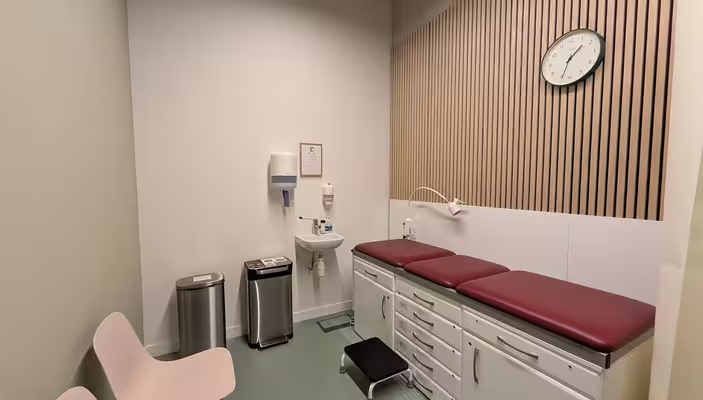
Stratford
Located within The Conductor building, a 6-minute walk from Stratford station, or 3 minutes from the Westfield shopping centre.

Online GP
Speak to a GP by video or phone while you are in the UK — no app needed. Ideal for follow-ups and straightforward concerns.
Frequently asked questions
- What can a full blood count detect—and what can it not diagnose?
A full blood count measures red blood cells, white blood cells and platelets. It can reveal patterns that support investigation of anaemia, infection, inflammation or a blood-cell problem, but it usually cannot identify the cause on its own. It does not test cholesterol, liver, kidney, thyroid or blood-sugar function and cannot diagnose or rule out HIV or cancer. A GP should interpret an abnormal result alongside your symptoms, examination and any additional tests. More information about the test is available at https://doctap.co.uk/blood-tests/full-blood-count.
- Will a full blood count show HIV?
No. A full blood count may show non-specific changes, but it cannot confirm or rule out HIV. Information about what a full blood count measures is available at https://doctap.co.uk/blood-tests/full-blood-count. You need a dedicated HIV test: at DocTap, the standard fourth-generation antigen/antibody test is conclusive from 45 days after the most recent exposure, while an HIV-1 RNA early-detection test is available from 10 days and still needs a later fourth-generation test if negative. The HIV testing options are listed at https://doctap.co.uk/hiv-tests. If the exposure was within 72 hours, seek urgent advice about post-exposure prophylaxis.