
New to DocTap? Get £5 off
Join our newsletter and get £5 off your first booking.
Thanks — we've received your details.
If there's a next step for you, we'll send it by email.
Create your DocTap account with this email address to claim your £5 off. Offer available to new patients only. Unsubscribe whenever you like.
Worried about high blood pressure? How to get checked
You do not need to wait for symptoms or a health check invitation. Find out where to get your blood pressure measured and what happens next.
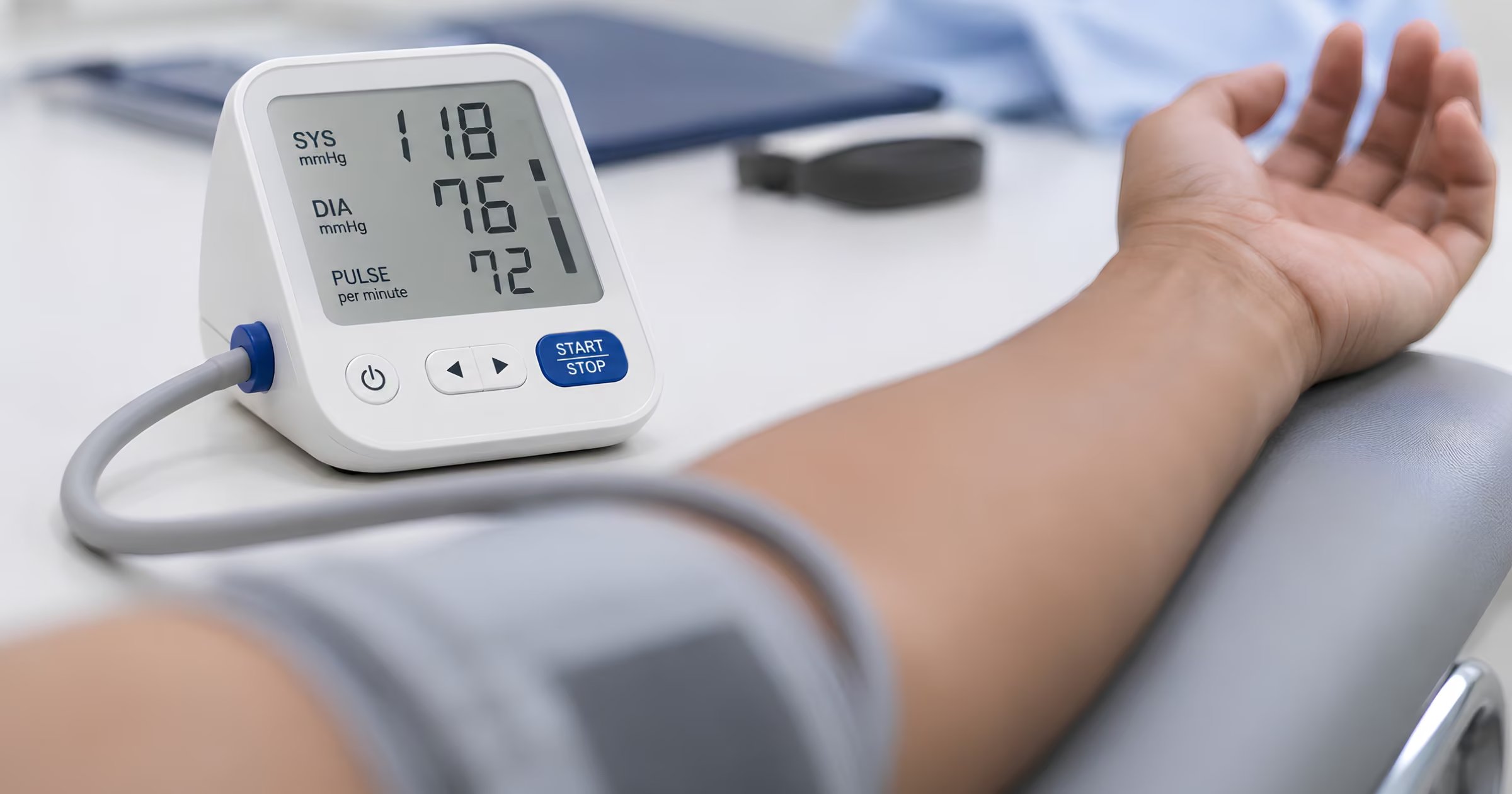

Getting checked and understanding your results
You can feel perfectly well and still have high blood pressure. That is why a quick check is worth doing, even if nothing feels wrong. You do not need to wait for symptoms, a birthday or an invitation to a health check.
A GP surgery or pharmacy can take a reading in a few minutes. The more useful question is what happens afterwards. Does the result need repeating? Would home readings help? And, if it stays high, what should you do next?
This guide explains the NHS and private options, how to get a reliable reading and when to seek help rather than wait for a routine appointment.
Where can you get your blood pressure checked?
Your NHS GP surgery and a local pharmacy are sensible starting points. You do not need a full health screen just to find out your blood pressure. Ask what appointments are available and whether there is a charge.
Free pharmacy checks in England
The NHS pharmacy finder can help you find a participating pharmacy. Its published criteria cover people who live in England, are 40 or over, have no previous diagnosis of high blood pressure and have not had a check in the past five years. Some younger adults at higher risk may also qualify, so ask the pharmacy team rather than assuming you are excluded.
You can approach the pharmacy without seeing a GP first. Depending on the reading, the team may offer advice, arrange further monitoring or ask you to contact your GP.
You do not have to be over 40
A family history of high blood pressure, kidney disease, diabetes or a previous raised result is a reason to discuss checks sooner. If you already take blood pressure medicine, follow your agreed review schedule rather than waiting five years.
A blood pressure check is not the same as an NHS Health Check
A blood pressure check gives you a measurement. An NHS Health Check looks more broadly at your risk of heart and circulation problems, including your cholesterol, weight, family history and lifestyle.
In England, eligible adults aged 40 to 74 are usually invited every five years. The NHS Health Check eligibility guidance explains the exclusions, including diagnosed hypertension, diabetes, chronic kidney disease and some cardiovascular conditions, as well as taking statins. People already living with these conditions should have regular reviews through their usual care team instead.
If you think you are due a Health Check, contact your GP practice. If it does not provide them, your local council can tell you where to go. But do not put off a blood pressure check while you wait for the broader appointment.
What the two numbers actually mean
Blood pressure describes the force of blood against your artery walls. In a reading such as 130/80 mmHg, the first number is the pressure when your heart contracts. The second is the pressure between beats.
- In a clinic, a systolic reading of 140 or above, or a diastolic reading of 90 or above, needs further assessment.
- At home, an average of 135 systolic or above, or 85 diastolic or above, is considered raised.
Either number can be high. They do not both have to cross the threshold. These figures help identify possible hypertension; they are not a personalised treatment target.
A single raised reading does not usually settle the diagnosis. Blood pressure varies, and being anxious during an appointment can push it up. Equally, a normal clinic reading does not always rule out higher readings at home. Bring the full record to your clinician rather than dismissing a result as stress.
When a high reading needs urgent help
Call 999 for chest pain that does not go away, severe breathlessness, new confusion, facial drooping, sudden arm weakness or difficulty speaking. Do not wait to take another reading. These symptoms need emergency assessment whatever the monitor says.
If the top number is 180 or above, or the bottom number is 120 or above, but you feel well, sit quietly and repeat the measurement. If it remains that high, contact your GP urgently that day, or NHS 111 if the surgery is unavailable. Do not wait to complete a week-long diary. A clinician needs to decide how quickly you need examination, tests or hospital assessment.
If you are pregnant or have recently given birth, contact your maternity team promptly about a raised reading or symptoms such as a severe headache, visual changes or pain under the ribs. Pregnancy-related hypertension follows a different pathway; do not wait for the numbers above.
How to get reliable readings at home
Home monitoring is useful when it is done consistently. Use a validated upper-arm monitor and the correct cuff size. Ask a pharmacist or clinician to check the fit and technique if you are unsure.
Before measuring, avoid smoking, caffeine and exercise for 30 minutes. Empty your bladder, sit quietly for five minutes and keep your back supported, feet flat and legs uncrossed. Put the cuff on bare skin, support your arm at heart level and do not talk during the reading.
For diagnosis, NICE recommends the following approach.
- Take two readings at least one minute apart while seated.
- Repeat this in the morning and evening for at least four days, ideally seven.
- Keep every result. The first day's readings are left out when calculating the average used for diagnosis.
Follow any different instructions your clinician gives you. A consistent record is more helpful than repeatedly checking until you get a number you like. If measuring makes you anxious, mention that too.
What happens if your blood pressure stays high?
The next step is to establish the pattern and look at your overall health. Your clinician may suggest a monitor that takes readings over 24 hours, called ambulatory blood pressure monitoring. Home readings are an alternative when that is unsuitable or difficult to tolerate.
Expect questions about previous results, medicines and supplements, smoking, alcohol, sleep, family history and other conditions. Take your medication list and home readings with you. Do not stop prescribed medicines to see what happens to the numbers.
Why blood and urine tests may be needed
A blood test cannot diagnose high blood pressure. It can help show how it fits into your wider health and inform treatment.
- Kidney function tests measure markers such as creatinine and electrolytes. Kidney health and blood pressure affect one another, and these results can influence medicine choices and monitoring.
- Cholesterol blood tests help assess cardiovascular risk alongside blood pressure, age, smoking and family history.
- HbA1c and diabetes blood tests can identify raised blood sugar, which changes the assessment of heart and kidney risk.
- Urine testing can look for small amounts of protein and blood. A urine albumin-to-creatinine ratio is different from a routine urine dipstick.
An ECG and examination of the back of the eyes may also be needed. Your clinician should explain what each investigation is for, rather than simply offering a long list of tests.
Managing high blood pressure is about more than one good reading
If hypertension is confirmed, the aim is to reduce the strain on your heart, blood vessels and kidneys over time. What happens next depends on how high your readings are, your wider cardiovascular risk and any existing conditions.
- Make realistic lifestyle changes. Reducing salt, staying active, limiting alcohol and losing excess weight can help. Choose changes you can keep doing, and ask for support with stopping smoking.
- Discuss medicines when needed. Some people need treatment alongside lifestyle changes. Needing a tablet does not mean you have failed. The choice depends on your medical history and results, and sometimes more than one medicine is needed.
- Keep the follow-up plan clear. Ask when to repeat readings, whether blood tests are needed and who will review the results. If treatment causes dizziness or other side effects, contact the prescriber rather than changing the dose yourself.
A lower reading while taking medicine may mean it is working, not that you no longer need it. Decisions about reducing or stopping treatment should be made with your clinician.
Blood pressure assessment and health screens at DocTap
If you choose private care, an in-person GP appointment can focus on a raised reading, your symptoms and what follow-up is needed. Bring your home diary and any recent results so the discussion starts with the information you already have.
Our private health screens offer a broader option. Bronze includes an assessment with a healthcare assistant, blood pressure and pulse checks, blood tests and a same-day report. Silver, Gold and Platinum include a GP consultation to discuss results and next steps. A health screen is not a substitute for urgent assessment, and you do not need a screening package simply to have your blood pressure measured.
Where further investigation is needed, private blood tests can be selected around the clinical question rather than ordering every available panel. Not every health screen includes every test used to investigate hypertension, so confirm what is included and what would cost extra.
Before booking, check appointment and test fees and choose a London clinic that offers the appointment you need. Agree who will review any further readings or results, and share the plan with your usual GP if they will be providing ongoing care.
Need to discuss a high blood pressure reading?
A DocTap GP can check your blood pressure, review your home readings and discuss whether further monitoring or tests are needed. For urgent symptoms, use the emergency advice above rather than booking a routine appointment.
About this article
This article provides general health information and is not a substitute for individual medical advice or a diagnosis. If you are unsure what to do, contact NHS 111; call 999 in an emergency. DocTap is a private healthcare provider, and links to DocTap services are promotional and may lead to chargeable services.