
New to DocTap? Get £5 off
Join our newsletter and get £5 off your first booking.
Thanks — we've received your details.
If there's a next step for you, we'll send it by email.
Create your DocTap account with this email address to claim your £5 off. Offer available to new patients only. Unsubscribe whenever you like.
When should you have an HIV test?
An HIV test can answer what symptoms and regional figures cannot. Understand testing windows, urgent advice after exposure and your NHS and private options.

Start with the timing, not symptoms
HIV can cause no symptoms for years, so you cannot judge your status by how you feel. Regional figures and news reports can show where testing needs are changing, but they cannot tell you whether a particular contact passed on HIV. Only an HIV test can do that.
The most useful detail is the date of your most recent possible exposure. The type of test and the time since that contact determine how reliable a negative result will be. If you have had more than one possible exposure, count from the most recent one.
Testing is sensible after vaginal or anal sex without a condom, a condom breaking, sharing injecting equipment, a partner being diagnosed with HIV, or when a sexual-health service advises you to test. It can also form part of routine STI screening when you have new or casual partners. None of these situations proves that you have HIV; they simply make testing worth considering.
HIV is not passed on through hugging, sharing cups, toilet seats or ordinary day-to-day contact. A person living with HIV who takes treatment and maintains an undetectable viral load cannot pass HIV on through sex. This is often described as U=U, meaning undetectable equals untransmittable.
Act quickly after a possible exposure
If the possible exposure happened within the last 72 hours, do not wait for a routine test appointment. Contact an NHS sexual-health clinic or go to A&E and ask about post-exposure prophylaxis, usually called PEP. This is a course of HIV medicine that may reduce the chance of infection after some higher-risk contacts.
PEP is not needed after every sexual contact. A specialist clinician will ask what happened, when it happened and whether HIV transmission was realistically possible. When PEP is appropriate, it should be started as soon as possible and no later than 72 hours after the exposure. The NHS explains where to get urgent help after possible HIV exposure.
A test taken immediately cannot rule out HIV from a contact that has just happened. The urgent priority is therefore a PEP assessment. The clinician will also explain which tests are needed now and when they should be repeated.
If more than 72 hours have passed, PEP will usually no longer be an option, but you should still arrange testing and advice. Do not assume that missing the PEP window means it is too late to do anything: well-timed testing can give you a clear answer and make sure any infection is identified promptly.
Choose the test that matches the window period
An HIV test has a window period. This is the time between infection and the point when that particular test can reliably detect it. Testing before the window has ended can be useful as a starting point, but a negative result may need to be repeated.
A laboratory fourth-generation HIV test looks for antibodies made by the immune system and a viral protein called p24 antigen. UK specialist guidance uses a 45-day window period for this type of test. In everyday terms, a negative fourth-generation laboratory result from at least 45 days after the most recent exposure is treated as conclusive unless a clinician advises a different follow-up plan.
An HIV-1 RNA test looks directly for genetic material from the virus and can be used earlier. DocTap offers this from 10 days after exposure. An early negative result does not replace the standard fourth-generation test: follow-up testing from 45 days is still recommended.
Rapid finger-prick tests and home self-tests do not all use the same technology. Their window can be as long as 90 days, so follow the instructions for the exact product rather than applying the 45-day rule to every test.
Tell the clinician if you use PrEP or have recently taken PEP. These medicines may change the recommended testing schedule. If you are unsure which option fits your timing, use a clinician-led appointment rather than choosing the largest package yourself.
Symptoms cannot confirm or rule out HIV
Some people develop a flu-like illness two to six weeks after acquiring HIV. Possible symptoms include fever, sore throat, swollen glands, a rash, tiredness, aching muscles or feeling generally unwell. These symptoms are not specific to HIV and are much more often caused by other illnesses.
Equally, many people with HIV feel completely well. Waiting for symptoms can therefore delay testing, while assuming that a common viral illness must be HIV can cause unnecessary anxiety. The reliable approach is to consider whether there was a possible exposure and test at the right time.
Arrange a prompt GP or sexual-health assessment if you become unwell after a possible exposure. Tell the clinician what happened and when, even if the symptoms seem unrelated. They can assess whether HIV testing or other STI tests are appropriate and whether another cause needs investigation.
A full blood count or a general health screen cannot confirm or exclude HIV. You need a dedicated HIV test. Other STI tests may be useful depending on the type of sexual contact, because infections such as chlamydia and gonorrhoea can affect the throat or rectum as well as the genitals. The guide to STI testing windows explains why the sample and timing differ between infections.
Testing routes and what happens at an appointment
NHS sexual-health clinics offer free and confidential HIV testing, and you can usually contact them directly without a GP referral. A GP can also arrange a test. Depending on where you live, free home self-sampling or self-testing may be available.
Self-sampling means taking your own sample and posting it to a laboratory. Self-testing means performing the test and reading the result yourself. They are not the same, and their window periods may differ. Check the instructions and make sure you know how follow-up will be arranged if the result is reactive.
Private testing is another option. DocTap offers dedicated HIV testing and broader STI testing at clinics across London. Routine testing is available when you have no symptoms and know which test you need. Choose a GP-led appointment if you have symptoms, a recent exposure, take PrEP or PEP, or are unsure which infections and body sites should be tested.
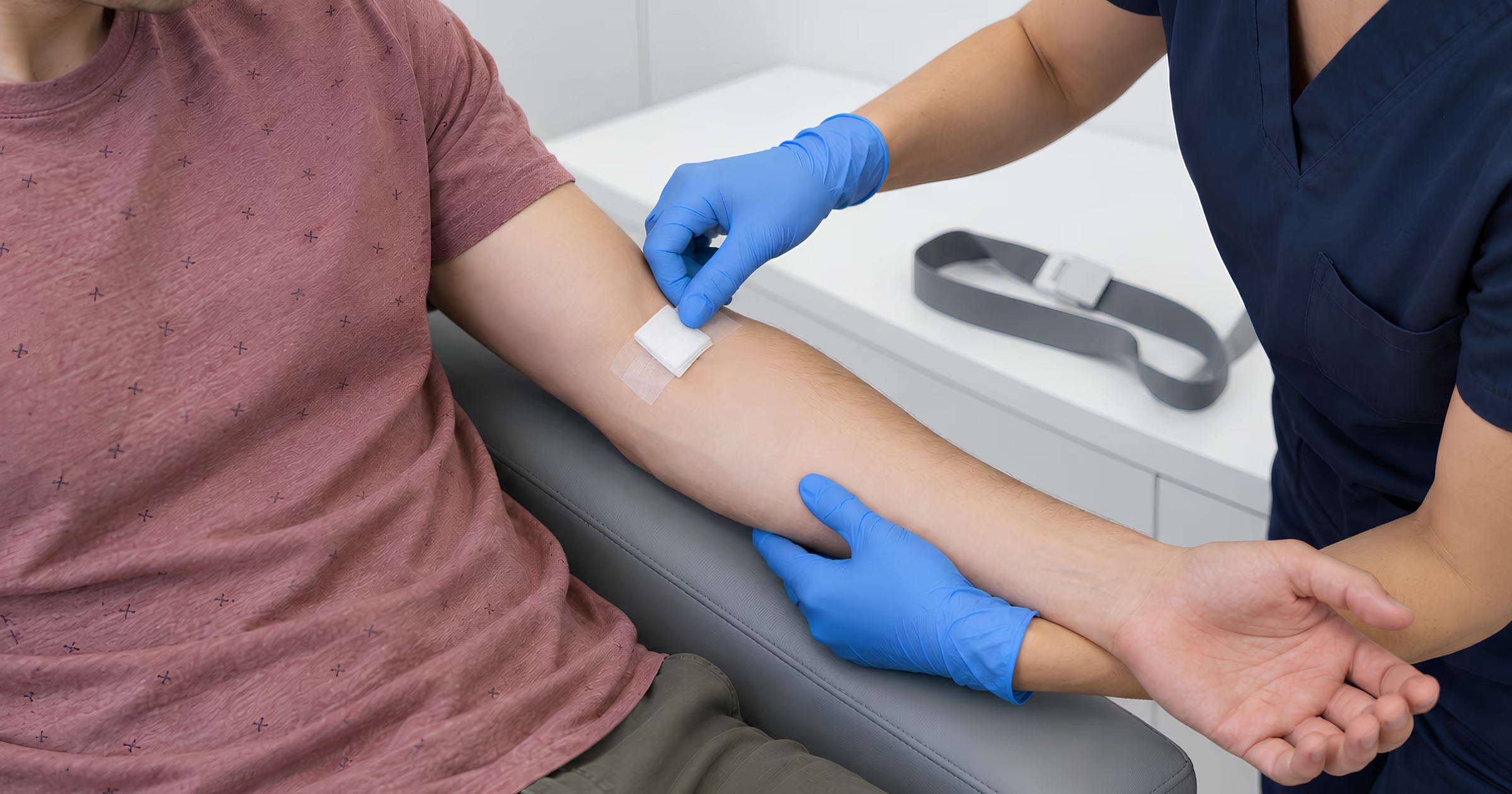
At an in-clinic HIV appointment, the clinician checks the timing and takes a blood sample from your arm. Results are delivered securely. The current HIV testing options explain the standard fourth-generation test, early-detection test, turnaround times and what is included. Broader STI screens may include HIV alongside syphilis, chlamydia and gonorrhoea, but the exact contents vary, so check the STI tests and prices rather than assuming every package is the same.
Understanding the result and next steps
A negative result means the test did not find evidence of HIV. Whether it rules out the exposure you are worried about depends on the test used, the date of the sample, the date of the most recent exposure and whether PrEP or PEP affects the follow-up plan.
For example, a negative fourth-generation result three weeks after exposure is reassuring but too early to be treated as conclusive for that contact. You would normally be advised to repeat it from 45 days. A later exposure starts a new window period.
A reactive screening result is not a final diagnosis. The laboratory will arrange or recommend confirmatory testing, and a clinician should explain the result and next steps. Do not try to interpret an unexpected result alone.
If HIV is confirmed, effective treatment allows most people to live a long and healthy life. Treatment can reduce the amount of virus in the blood to an undetectable level, protecting health and preventing sexual transmission. HIV treatment is provided through specialist NHS services. DocTap can explain a private test result and arrange referral, but does not provide ongoing HIV treatment.
Keep a copy of your result and follow the testing service's advice. Seek further advice if the timing was too early, another exposure occurred afterwards or the result does not fit the clinical picture.
Making HIV testing part of sexual health care
One test may be enough after a single past exposure, provided it is taken after the correct window period and there have been no later risks. Testing more regularly makes sense when possible exposure is ongoing.
UKHSA advises people who have sex without condoms with new or casual partners to include HIV in an STI screen at least annually. Gay, bisexual and other men who have sex with men are advised to test at least annually, or every three months when having condomless sex with new or casual partners. Individual advice may differ, particularly for people using PrEP.
Testing is only one part of prevention. Condoms reduce the risk of HIV and many other STIs. PrEP is medicine taken before and around times of possible exposure and may be suitable for people with an ongoing higher risk. PEP is for emergencies after a possible exposure and must be assessed within 72 hours.
If you want private testing, start with the timing rather than the number of infections in a package. Compare the HIV test options, or use a GP-led sexual-health appointment if you would like help choosing. Appointments are available at DocTap clinic locations across London. A recent possible exposure within 72 hours should still be taken to an NHS sexual-health clinic or A&E urgently rather than waiting for a private appointment.
For routine testing when you have no symptoms
HIV tests with a healthcare assistant
Choose this option if you have no symptoms, know which HIV test you need and do not need medical advice. The standard test is suitable from 45 days after a possible exposure. The early-detection test looks for the virus itself from 10 days, but a negative result should be followed by a standard HIV test at 45 days. These appointments are available at five clinics with on-site laboratories, and the displayed price includes the appointment, test, handling and results.
HIV
4-hour resultsSuitable from 45 days post exposure. Same-day HIV results within 4 hours, backed by our money-back guarantee.
- HIV 1&2/p24 antigen
- All-inclusive price
HIV early detect
Suitable from 10 days post exposure. A confirmatory standard HIV test is recommended after 45 days. Next day results.
- HIV 1 RNA
- All-inclusive price
For symptoms, concerns or help choosing a test
HIV tests with a GP consultation
Choose this option if you have symptoms, want medical advice or are unsure which HIV test fits the timing. A 15-minute GP consultation is included, and the GP can advise whether the standard test from 45 days or early-detection testing from 10 days is appropriate. These appointments are available at every DocTap clinic, and the displayed price includes the consultation, test, handling and results. If the possible exposure was within the past 72 hours, seek urgent PEP assessment through an NHS sexual-health clinic or A&E rather than waiting for a test.
HIV
4-hour results at lab clinicsSuitable from 45 days post exposure. 4 hour results at select clinics, next day by 6pm elsewhere.
- HIV 1&2/p24 antigen
- 15-minute GP consultation included
- All-inclusive price
HIV early detect
Suitable from 10 days post exposure. If negative a confirmatory HIV 1&2/p24 antigen is recommended at 45 days. Results by 6pm next day.
- HIV 1 RNA
- 15-minute GP consultation included
- All-inclusive price
Choose the right HIV test for your timing
Compare standard and early-detection HIV tests, or choose a GP-led sexual-health appointment if you have symptoms or are unsure what to test for. If the possible exposure was within the last 72 hours, seek urgent NHS sexual-health or A&E advice instead.
About this article
This article provides general health information and is not a substitute for individual medical advice or a diagnosis. If you are unsure what to do, contact NHS 111; call 999 in an emergency. DocTap is a private healthcare provider, and links to DocTap services are promotional and may lead to chargeable services.