
New to DocTap? Get £5 off
Join our newsletter and get £5 off your first booking.
Thanks — we've received your details.
If there's a next step for you, we'll send it by email.
£5 offer for new patients only. Not available if you've previously paid DocTap or received employer-funded DocTap care. Create an account using this email address. One per account. Unsubscribe at any time.
Salmonella symptoms, testing and when to seek help
Salmonella can cause diarrhoea, stomach cramps, vomiting and fever. Learn how it is diagnosed, when testing may help and which symptoms need urgent advice.
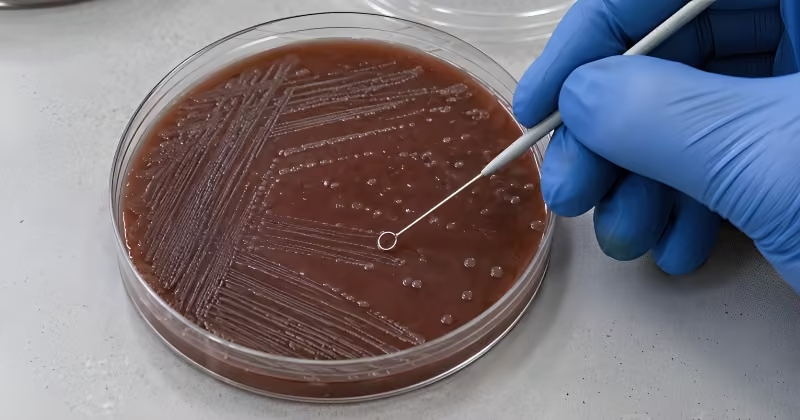

Salmonella is a bacterial infection and one possible cause of food poisoning. It usually affects the gut and can cause diarrhoea, stomach cramps, nausea, vomiting and fever. These symptoms can also be caused by other infections, so symptoms alone cannot confirm Salmonella.
Recent UKHSA and Food Standards Agency investigations have highlighted Salmonella again, including clusters linked to possible imported egg exposure and eating out. Individual outbreaks change over time, but the practical advice remains useful: know the symptoms, watch hydration, understand warning signs and use testing when it will answer a specific clinical question.
Most people recover without specific treatment, but dehydration and other complications can occur. Young children, older adults and people with a weakened immune system may be at greater risk of becoming seriously unwell.
What is Salmonella
Salmonella bacteria can live in the intestines of people and animals. Infection is most commonly linked to contaminated food or water, but it can also spread through contact with an infected person, an animal or a contaminated environment.
Foods associated with infection can include poultry, meat, eggs, unpasteurised dairy products and raw fruit or vegetables. Cross-contamination can happen when bacteria from raw food are transferred to ready-to-eat food, kitchen surfaces or utensils.
Common Salmonella symptoms
Possible symptoms include
- diarrhoea, which may sometimes contain blood
- stomach cramps or abdominal pain
- feeling sick or being sick
- a raised temperature
- headache, tiredness or feeling generally unwell
The UKHSA guidance on Salmonella says symptoms usually develop between 12 and 72 hours after infection and illness often lasts for four to seven days. The timing and severity can vary, and some people have symptoms for longer.
How Salmonella spreads
Salmonella may be passed on through contaminated food or water, close contact with someone who has diarrhoea, or contact with infected animals. Reptiles and some other pets can carry the bacteria even when they appear well.
Good hand hygiene and careful food preparation reduce the risk of infection. Wash your hands with soap and water after using the toilet, changing nappies, handling raw food or touching animals, and before preparing or eating food.
Looking after yourself at home
Mild food poisoning can often be managed at home. The main priority is replacing the fluid lost through diarrhoea and vomiting.
- Drink regularly and take small sips if you feel sick.
- Ask a pharmacist about oral rehydration solutions if you have signs of dehydration.
- Rest and eat when you feel able.
- Continue normal breast or bottle feeds for a baby, offering smaller feeds more often if needed.
- Ask a pharmacist or doctor before using medicine to stop diarrhoea, especially for a child.
Signs of dehydration can include dark urine, passing urine less often, dizziness, a dry mouth and unusual tiredness. Babies and young children may have fewer wet nappies.
Symptoms that need urgent medical advice
Contact NHS 111 if you or your child cannot keep fluids down, have bloody diarrhoea, continue to show signs of dehydration after using oral rehydration sachets, have diarrhoea for more than seven days or have been vomiting for more than two days. Contact NHS 111 if you are worried about a baby under 12 months.
The NHS food poisoning guidance also explains which symptoms require emergency care. Call 999 or go to A&E if someone is confused or not responding as usual, has severe difficulty breathing, vomits blood or develops sudden severe abdominal pain.
Do not wait for a routine or private GP appointment if emergency symptoms are present.
How Salmonella is diagnosed
Salmonella cannot usually be confirmed from symptoms alone, because diarrhoea, cramps, vomiting and fever can also be caused by other stomach infections. A GP will usually ask about symptom timing, foods eaten, recent travel, contact with anyone unwell, your medical history and any warning signs such as dehydration or blood in the stool.
A stool sample is usually the most relevant test when Salmonella needs to be checked. Symptoms alone cannot reliably separate Salmonella from Campylobacter, Shigella, E. coli, norovirus, Giardia or other causes of infectious diarrhoea. DocTap can arrange stool testing for common gastrointestinal infections through GP appointments across our London clinics. This is more useful than booking a broad blood-test panel in isolation, because the question is whether an infection is present in the gut.
A GP may also consider other checks if you are dehydrated, symptoms are ongoing, you are at higher risk of complications or the diagnosis is unclear. In some cases, blood tests may help assess the effects of illness or look for another cause, but they do not confirm Salmonella on their own. You can view the current laboratory test list, but the right test depends on your symptoms and clinical context.
Salmonella testing at DocTap
For stable, non-emergency symptoms, a GP may recommend stool PCR testing for enteric organisms. DocTap offers Enteric Organism Rapid Detection (RF), a stool test that includes Salmonella and a range of other bacterial, viral and parasitic causes of diarrhoea.
Depending on the history, a GP may also consider Stool for OCP and Culture by PCR, particularly where travel history, prolonged symptoms or parasite infection are part of the clinical question. The aim is not simply to look for Salmonella, but to choose a test that matches the pattern of illness.
The most useful route is usually a GP appointment first, so the doctor can check whether a stool sample is needed and whether your symptoms suggest dehydration, complications or another diagnosis. If testing is arranged, your result should be interpreted alongside your symptoms, medical history and how unwell you are.
Testing should not delay urgent NHS care when warning signs are present. If you are very unwell, dehydrated, confused, passing blood, have severe abdominal pain or are worried about a baby or vulnerable person, use NHS 111, urgent care, A&E or 999 depending on severity.
What treatment may involve
Most Salmonella infections improve with rest, fluids and careful self-care. The main risk is dehydration, especially if diarrhoea or vomiting is frequent. Oral rehydration solutions from a pharmacy may help replace salts and fluids.
Antibiotics are not routinely needed for most uncomplicated Salmonella infections and should not be taken unless prescribed for your current illness. They may be considered in selected cases, such as severe illness or higher-risk patients, but this needs clinical assessment.
A GP can help decide whether symptoms are settling as expected, whether stool testing is needed, whether dehydration needs treatment, and whether urgent NHS care is the safer route. A private GP appointment is only suitable for stable, non-emergency symptoms. Severe dehydration, confusion, vomiting blood, severe abdominal pain or signs of sepsis need NHS 111, urgent care, A&E or 999 depending on severity.
Reducing the risk of spreading infection
- Wash your hands thoroughly with soap and water after using the toilet and before handling food.
- Do not prepare food for other people while you have diarrhoea or vomiting.
- Clean kitchen surfaces and utensils after preparing raw food.
- Keep raw food separate from food that is ready to eat.
- Follow storage, use-by and cooking instructions.
Adults should stay away from work and children should stay away from school or nursery until at least 48 hours after diarrhoea and vomiting have stopped. People who work with food, in healthcare or with vulnerable people may need additional occupational or public health advice.
How a GP may help
A GP can assess your symptoms, check for dehydration or other warning signs and discuss whether stool testing is needed. DocTap appointments are suitable for people who are stable and need a clinical assessment, but private care should not delay NHS 111 or emergency services when urgent symptoms are present.
Test options
Stool tests offered by DocTap
These are examples of DocTap stool tests a GP may consider when Salmonella or another gastrointestinal infection is suspected. The right test depends on your symptoms, travel history, risk factors and whether urgent NHS care is needed.
Detection of Bacterial, Viral and Parasitic Infection by Multiplex Real-Time PCR
Bacteria and Bacterial ToxinsC. difficile Toxin A/B gene, Campylobacter spp., Enteroaggregative E.coli (EAEC), Enteroinvasive E.coli (EIEC)/Shigella, Enterotoxigenic E.coli (ETEC), Enteropathogenic E.coli (EPEC), Plesiomonas shigelloides, Salmonella, Shiga-toxin producing E.coli (STEC) stx1/stx2, Shiga-toxin producing E.coli (STEC) O157:H7, Vibrio cholerae, Vibrio parahaemolyticus, Vibrio vulnificus, Yersinia enterocolitica
VirusesAdenovirus 40/41, Astrovirus, Norovirus GI, Norovirus GII, Rotavirus A, Sapovirus (I, II, IV, V)
ParasitesCyclospora cayetanensis, Cryptosporidium spp., Entamoeba histolytica, Gardia lamblia
This does NOT include stool for m/c/s – this needs to be requested as a separate test. Please provide two samples if this is required.
Concerned about Salmonella symptoms?
If symptoms are persistent, severe or you are unsure whether Salmonella testing is needed, a GP can assess your symptoms and advise whether stool PCR testing or further care is appropriate.
About this article
This article provides general health information and is not a substitute for individual medical advice or a diagnosis. If you are unsure what to do, contact NHS 111; call 999 in an emergency. DocTap is a private healthcare provider, and links to DocTap services are promotional and may lead to chargeable services.