
New to DocTap? Get £5 off
Join our newsletter and get £5 off your first booking.
Thanks — we've received your details.
If there's a next step for you, we'll send it by email.
£5 offer for new patients only. Not available if you've previously paid DocTap or received employer-funded DocTap care. Create an account using this email address. One per account. Unsubscribe at any time.
Returned from holiday with prolonged diarrhoea? When to seek help
Most holiday stomach bugs settle within a few days, but persistent or severe diarrhoea may need medical assessment and testing.
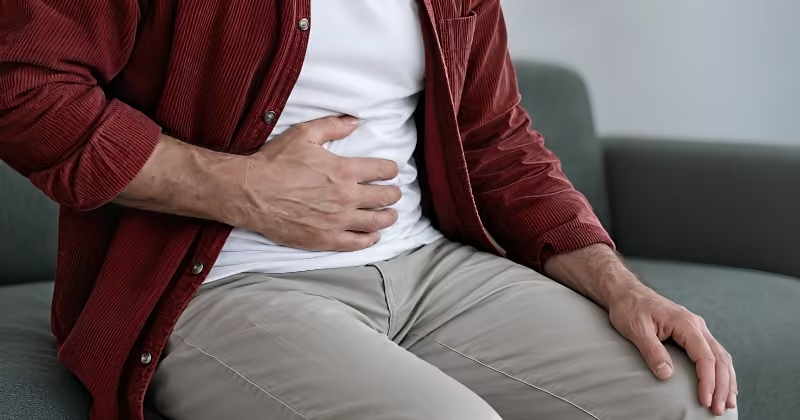

Most diarrhoea after a holiday settles within five to seven days. If symptoms last longer, contact your NHS GP or NHS 111 and mention your recent travel. Do not wait seven days if you cannot keep fluids down, have bloody diarrhoea, are becoming dehydrated or develop severe pain. Follow the urgent-care advice below.
Your destination, travel dates and when the symptoms began can help a clinician decide whether testing is needed. Several viruses, bacteria and parasites can cause similar symptoms, so the cause cannot usually be identified from symptoms alone.
How long should diarrhoea after travel last?
Short-lived diarrhoea and vomiting are common after travel. NHS guidance on diarrhoea and vomiting says diarrhoea in adults usually settles within five to seven days, while vomiting commonly stops within one or two days.
Recovery is not always a straight line. Appetite and energy may take a little longer to return, and the bowel can remain sensitive for a short period after an infection. However, symptoms that continue beyond a week, keep returning or are getting worse should be assessed.
Do not wait for seven days if you are very unwell, cannot stay hydrated or have blood in your stool.
What the pattern of symptoms can tell us
People naturally search for a specific infection when symptoms begin after a holiday. A more useful starting point is the pattern of illness.
- Sudden vomiting and watery diarrhoea can occur with viral infections such as norovirus. These illnesses often spread quickly between people who travelled or stayed together.
- Diarrhoea with fever, strong cramps, blood or mucus may occur with bacterial infections such as Campylobacter, Salmonella or Shigella. These features need medical advice rather than self-diagnosis.
- Watery diarrhoea that lasts, improves and returns can occur with parasites such as Giardia or Cyclospora. Bloating, increased wind, reduced appetite, tiredness or weight loss may also be present.
- Persistent diarrhoea after swimming or swallowing untreated water can raise the possibility of infections such as Cryptosporidium, although other causes remain possible.
These patterns are clues, not diagnoses. The same infection can affect different people differently, and non-infectious problems can also begin around the time of a trip.
Common post-holiday infections
Traveller's diarrhoea is a general description rather than one diagnosis. It can be caused by contaminated food or water, contact with an infected person or, less commonly, another exposure during the trip.
Possible causes include norovirus, Campylobacter, Salmonella, Shigella, Giardia, Cryptosporidium and Cyclospora. The likely organisms vary by destination, accommodation, food and water exposure, activities and contact with other people who were unwell.
If you develop diarrhoea while taking antibiotics or after a recent course, contact a GP urgently or NHS 111 rather than waiting seven days. This can sometimes be caused by C. difficile, an infection that may need treatment. Tell the clinician which antibiotic you took and when. Medicines and existing bowel conditions can also cause similar symptoms, so travel is only one part of the assessment.
A fever after travel should not automatically be treated as a stomach bug. If you have returned from a country where malaria occurs and develop a fever or flu-like symptoms, seek urgent medical advice and clearly state where you travelled.
When to seek urgent medical help
Contact NHS 111 urgently if you:
- cannot keep fluids down
- are passing much less urine than usual or have very dark urine
- remain dizzy when you stand up
- have bloody diarrhoea or bleeding from your bottom
- have worsening abdominal pain that is not severe
- have a high temperature and feel very unwell
- develop yellowing of the skin or whites of the eyes.
Call 999 or go to A&E for new confusion, collapse, marked drowsiness or difficulty waking, or severe abdominal pain. Do not drive yourself. Do not delay emergency care while arranging a private appointment or test.
Babies, older adults and people with a weakened immune system can become dehydrated more quickly. People who are pregnant or have a significant long-term condition should seek advice earlier if they are concerned.
When to arrange a GP assessment
Contact your NHS GP or NHS 111 if diarrhoea lasts more than seven days. Bloody diarrhoea needs urgent advice today from a GP or NHS 111 rather than a routine appointment. Arrange a GP assessment for recurring diarrhoea, persistent discomfort, marked tiredness, weight loss or mucus. For warning signs, follow the urgent-care advice above.
If attending a clinic is difficult, a video GP appointment can be a useful starting point, although any stool or blood sample will still need to be collected separately.
It is also sensible to seek advice when several people from the same trip are unwell or when symptoms are affecting your ability to eat, drink, work or sleep.
A useful travel history includes:
- the countries and regions you visited
- your travel dates and when the symptoms began
- whether the diarrhoea is watery, bloody or contains mucus
- any fever, vomiting, pain, rash, jaundice or weight loss
- whether symptoms stopped and then returned
- food, buffet meals, untreated water or ice you may have consumed
- swimming pools, lakes, rivers or other water exposure
- whether anyone else who travelled or ate with you is unwell
- recent medicines, especially antibiotics
- existing medical conditions or treatments that affect immunity.
Writing these details down before the appointment can be helpful, especially after a multi-stop trip.
When a stool sample may help
Not everyone with diarrhoea needs a laboratory test. A doctor may recommend a stool sample when symptoms are persistent, severe, bloody, associated with fever or linked to recent travel.
Depending on the clinical history, stool testing can look for bacteria, parasites or other gastrointestinal organisms. Some tests use PCR to detect genetic material from several organisms, while culture or parasite testing may be used for particular questions. No single test covers every possible cause.
DocTap can arrange stool testing using PCR and other laboratory methods where clinically appropriate. The GP will decide which sample and test are relevant rather than asking you to choose a panel based on a list of infection names. You can view DocTap's current laboratory test list, but an appointment is the right starting point if you are unwell or unsure what is needed.
If a stool sample is requested, follow the collection instructions carefully. The laboratory may need information about recent travel, antibiotics and the appearance or duration of the diarrhoea to process the sample appropriately.
Choosing the right stool test
The most useful stool test depends on how long you have been unwell, where you travelled and any recent antibiotic use.
At DocTap, a GP can arrange an Enteric Organism Rapid Detection PCR panel to look for a range of bacteria, viruses and parasites, including Salmonella, Cyclospora, Cryptosporidium and Giardia. Separate microscopy, culture and antibiotic-sensitivity testing are not included in this panel.
Another option is Stool for OCP and Culture by PCR. Your GP will choose the investigation that best answers the clinical question and check that it covers any particular infection suspected. You would not usually need both panels.
Sometimes additional parasite testing or more than one stool sample is needed. Tell your GP about recent antibiotics, as this may affect whether C. difficile testing is required. Results are considered alongside your symptoms and travel history before deciding on treatment.
When symptoms persist despite initial testing
Diarrhoea lasting two weeks or longer can reflect an ongoing infection, a bowel condition brought to light by the illness, or a post-infectious change. A negative stool panel does not exclude every cause.
Further investigations should follow the history and examination. Coeliac blood tests or faecal calprotectin may be considered when a non-infectious cause is suspected. Calprotectin is not a test for a particular travel infection and can rise during infection, so it is not an automatic addition to an initial stool panel.
What blood samples can and cannot show
A routine blood test does not usually identify the organism causing diarrhoea. Stool testing is generally more direct when the aim is to look for a gastrointestinal infection.
Blood samples may still be useful. Depending on the symptoms, a doctor might use them to assess kidney function and salt levels after fluid loss, use a full blood count to check for anaemia when tiredness persists, look for signs of inflammation, review liver function or investigate another possible cause. More specific blood tests or blood cultures may be needed in particular circumstances, such as suspected enteric fever or significant systemic illness.
The decision should follow a clinical assessment. DocTap offers private blood tests, but a broad set of results is not a substitute for choosing the right investigation and interpreting it alongside your symptoms.
What treatment might involve
The main treatment for uncomplicated diarrhoea is usually fluid replacement, rest and time. Take frequent small sips if a full drink makes you feel sick. A pharmacist can advise about oral rehydration solution, which replaces water and salts lost through diarrhoea and vomiting.
Antibiotics are not routinely needed for every post-travel infection. They do not treat viruses, some infections recover without them and the wrong antibiotic can be ineffective or cause harm. Do not take leftover antibiotics or medicines bought abroad without medical advice.
A pharmacist can also advise whether an anti-diarrhoeal medicine is suitable. These medicines are not appropriate in every situation, particularly when there is blood in the stool or a fever.
How to avoid passing an infection to other people
Until the cause is clear, treat diarrhoea and vomiting as potentially infectious:
- wash your hands thoroughly with soap and warm water after using the toilet and before handling food
- clean toilet seats, flush handles, taps and bathroom surfaces regularly
- do not share towels
- avoid preparing food for other people while you have diarrhoea or vomiting and for at least 48 hours after the last episode
- stay away from work, school or nursery until at least 48 hours after the last episode of diarrhoea or vomiting
- do not use swimming pools while you have diarrhoea or vomiting, or for at least 48 hours after symptoms stop. If Cryptosporidium is diagnosed, avoid swimming for two weeks after diarrhoea has stopped.
Alcohol hand gel does not reliably replace handwashing for all stomach bugs. If you work with food, in healthcare or with vulnerable people, ask your employer or clinician whether additional precautions or clearance are needed.
The practical next step
Most post-holiday stomach bugs settle with fluids and rest. Seek medical advice when symptoms last, relapse or come with dehydration, blood, fever, significant pain or weight loss.
You can book a GP appointment to discuss whether you need a stool sample, blood tests, treatment or onward care. Appointments are available at London clinics. Bring a clear travel history and any information about other people who became unwell. If you are seriously unwell, use NHS urgent or emergency care rather than waiting for a private appointment.
Stool tests offered by DocTap
Detection of Bacterial, Viral and Parasitic Infection by Multiplex Real-Time PCR
Bacteria and Bacterial ToxinsC. difficile Toxin A/B gene, Campylobacter spp., Enteroaggregative E.coli (EAEC), Enteroinvasive E.coli (EIEC)/Shigella, Enterotoxigenic E.coli (ETEC), Enteropathogenic E.coli (EPEC), Plesiomonas shigelloides, Salmonella, Shiga-toxin producing E.coli (STEC) stx1/stx2, Shiga-toxin producing E.coli (STEC) O157:H7, Vibrio cholerae, Vibrio parahaemolyticus, Vibrio vulnificus, Yersinia enterocolitica
VirusesAdenovirus 40/41, Astrovirus, Norovirus GI, Norovirus GII, Rotavirus A, Sapovirus (I, II, IV, V)
ParasitesCyclospora cayetanensis, Cryptosporidium spp., Entamoeba histolytica, Gardia lamblia
This does NOT include stool for m/c/s – this needs to be requested as a separate test. Please provide two samples if this is required.
Still unwell after your holiday?
A GP can review your symptoms and advise whether a stool sample, blood test or other care may be appropriate.
About this article
This article provides general health information and is not a substitute for individual medical advice or a diagnosis. If you are unsure what to do, contact NHS 111; call 999 in an emergency. DocTap is a private healthcare provider, and links to DocTap services are promotional and may lead to chargeable services.